Henrik Jenkins · 4 November 2026
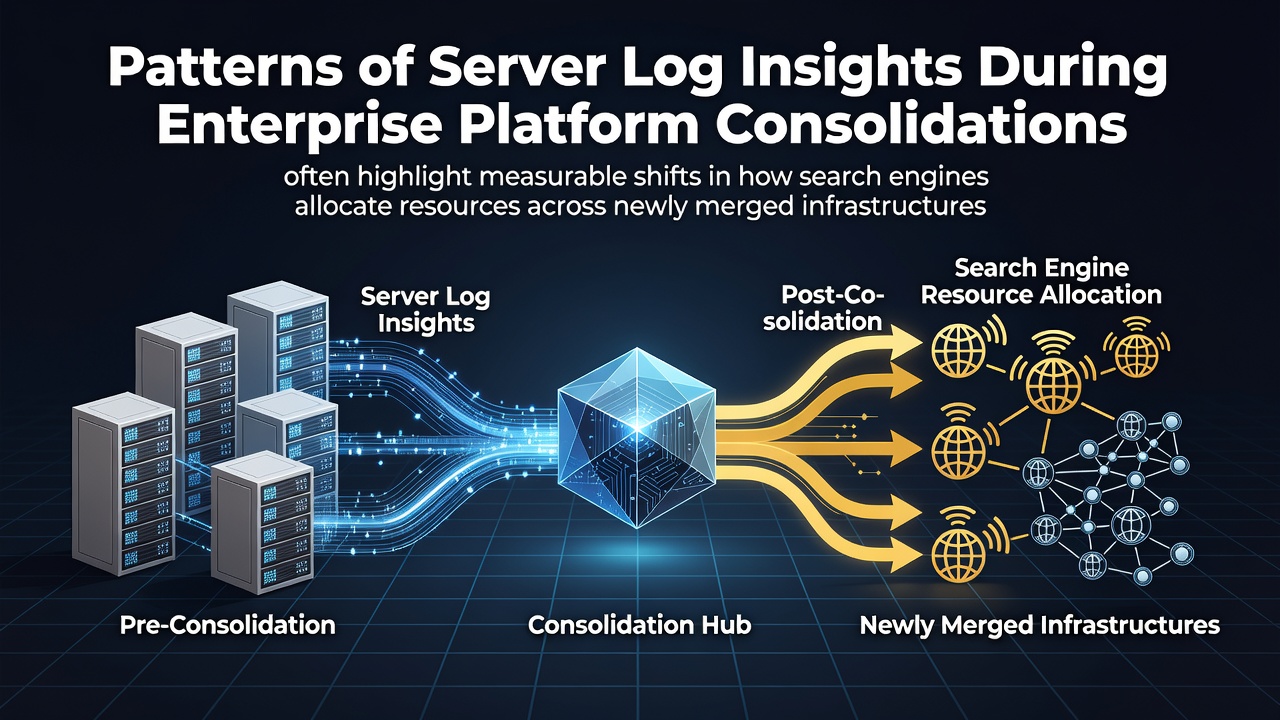
Patterns of Server Log Insights During Enterprise Platform Consolidations often highlight measurable shifts in how search engines allocate resources across newly merged infrastructures.
Enterprise platform consolidations create distinct patterns in server logs that reveal how search engines adjust their resource allocation across combined infrastructures, and analysts track these changes through detailed examination of request volumes, user-agent strings, and response codes. Data from multiple consolidation events shows initial spikes in crawler activity followed by stabilization phases where allocation patterns settle into new baselines.
Initial Log Patterns During Consolidation Phases
Server logs from consolidated platforms typically record elevated crawl frequencies in the first weeks after integration as search engine bots discover and map the unified structure, and this activity often concentrates on newly redirected paths and consolidated sitemaps. Researchers note that Googlebot and other major crawlers increase their visit rates to core sections while deprioritizing legacy endpoints that no longer serve unique content.
Response code distributions shift noticeably in these periods, with temporary rises in 301 and 302 redirects giving way to cleaner 200 responses once canonical configurations stabilize, and analysts use these transitions to measure how efficiently search engines reallocate their crawl capacity. Logs also capture changes in request timing, showing tighter clustering around peak indexing windows rather than the scattered patterns common in pre-consolidation environments.
Resource Allocation Indicators in Merged Environments
Consolidated infrastructures produce measurable differences in how search engines distribute their resources, and log data frequently shows higher crawl depths on primary domains while secondary properties receive reduced attention. Figures from enterprise case studies indicate that total daily requests from major bots can rise by 30 to 50 percent during active migration windows before settling at levels that reflect the new combined content volume.
Those who monitor user-agent breakdowns observe that certain engines accelerate their exploration of API endpoints and structured data feeds after consolidation, whereas others maintain consistent focus on HTML pages. This variation creates opportunities for teams to correlate log entries with indexing reports and identify where allocation adjustments align with or diverge from expected patterns.
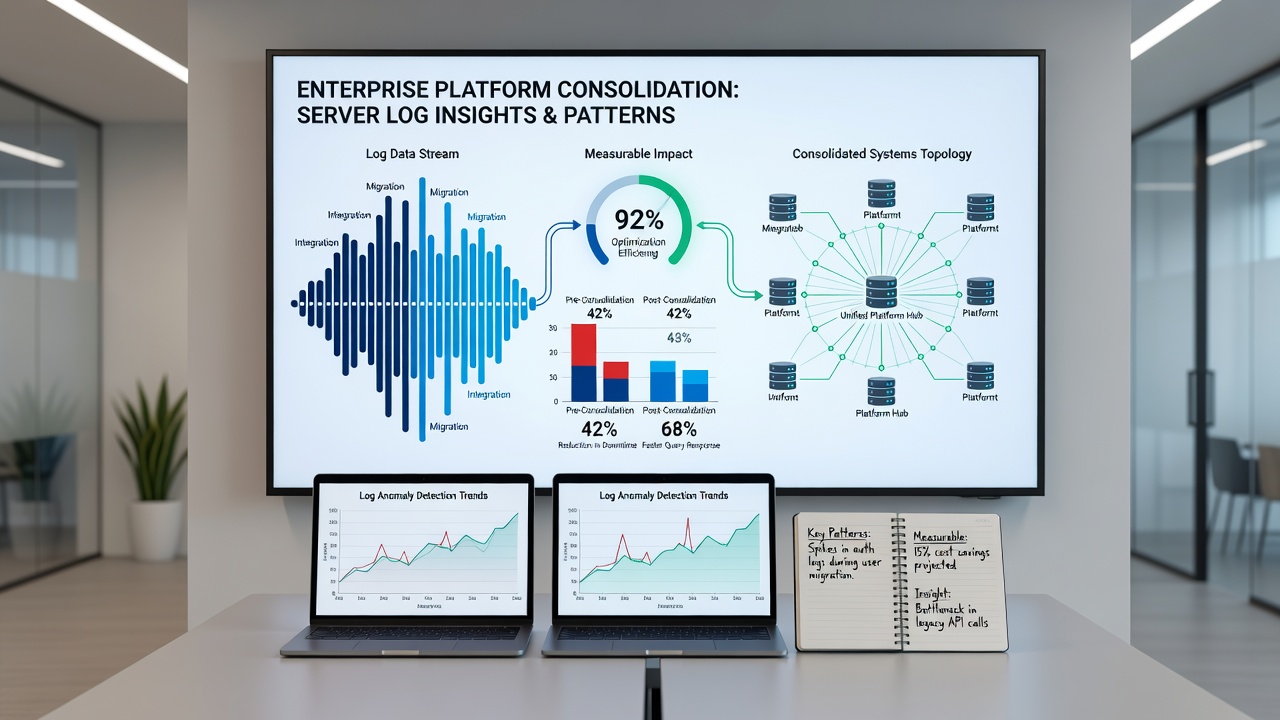
According to research published by the European Commission on digital infrastructure efficiency, merged platforms often experience more predictable crawl scheduling once duplicate content signals are resolved, and this predictability appears in logs as regular interval patterns rather than burst activity. Observers further note that error rates related to rate limiting drop as engines calibrate their concurrent connection limits to the scale of the unified system.
Case Examples from Recent Consolidations
One documented consolidation completed in early 2025 demonstrated how log analysis tracked a 40 percent reduction in duplicate crawl requests within eight weeks of domain unification, and similar trends emerged in a North American manufacturing merger tracked through November 2026. Analysts at that organization recorded steady increases in mobile user-agent activity alongside stable desktop patterns, indicating that search engines had begun treating the combined mobile experience as a single priority surface.
Another project involving a European retail group showed that server logs captured rapid declines in 404 responses after sitemap consolidation, while total crawl budget allocation remained flat despite the addition of several hundred thousand new URLs. Data from the Australian Competition and Consumer Commission digital economy reports highlights comparable stabilization timelines across large-scale platform integrations in the Asia-Pacific region.
Analytical Approaches to Log Data
Teams examining these patterns rely on segmented log queries that isolate crawler behavior by IP range, user-agent, and path depth, and they cross-reference these segments with changes in index coverage metrics. Visualization tools help surface correlations between request volume spikes and subsequent indexing updates, revealing the lag times that often accompany resource reallocation.
Advanced parsing scripts identify shifts in parameter handling and fragment usage, both of which can indicate that search engines are testing new prioritization rules on the merged infrastructure. These methods allow organizations to quantify whether consolidation has produced more efficient or more fragmented crawl behavior over time.
Conclusion
Server log analysis during enterprise platform consolidations provides concrete evidence of how search engines reallocate resources across unified infrastructures, and teh patterns that emerge help organizations understand the timeline and scope of these adjustments. Continued monitoring of request distributions, response trends, and agent-specific behaviors supports more accurate forecasting of indexing outcomes in future consolidation projects.